Today's show will highlight nine tips for building wealth that may surprise you. I'll review why they seem to go against the grain but can lead to more financial success.
This past year wasn’t easy—but it was certainly eventful. Donald Trump returned to the White House, issued a record number of executive orders, deployed the National Guard to American cities—like LA and D.C.—imposed sweeping tariffs on all our trading partners, gutted the government with the Department of Government Efficiency (DOGE), and unleashed a massive crackdown on immigration.
But that was only the beginning.
The administration also reached a ceasefire between Israel and Hamas—and all the living hostages came home from Gaza. Israel and the United States struck Iran’s nuclear sites. We got the first American pope. And we haven’t even started listing the pop-culture moments, like the Sydney Sweeney jeans ad, the Travis Kelce–Taylor Swift engagement, or when Lauren Sánchez Bezos and Katy Perry went to space. There was truly so much, and if we kept going we’d be here all day.
But this, after all, is a prediction episode. So what will 2026 bring?
Bari and Free Press deputy editor Olly Wiseman called up some friends of the pod—and experts in their fields—to get a better sense of what’s in store for the year ahead.
They spoke to political analyst and legal expert Sarah Isgur, who told them what to expect in Trump’s second year; to Suzy Weiss on the cultural calendar ahead; to linguist John McWhorter on how new words and language will evolve; to Dr. Mark Hyman on how to get healthier in 2026; to writer and fashionista Leandra Medine Cohen on fashion trends to watch for; and to historian Niall Ferguson on whether or not we’re right to have nightmares about World War III.
From the number of women in space and transistors on a chip to social media usage -we’re taking a look back the key numerical moments of 2025. We explore the woes of a big infrastructure projects. Plus, just how can you make sure your New Year’s Resolutions are successful? We’ve got statistics to help.
Presenter: Tim Harford
Reporter: Lizzy McNeil
Producers: Charlotte McDonald and Katie Solleveld
Production Coordinator: Maria Ogundele
Sound Mix: Neil Churchill
Editor: Richard Vadon
As 2025 comes to a close, we're revisiting interviews with this year's nominees and winners of some of the biggest prizes in literature. Megha Majumdar’s novel A Guardian and a Thief, a finalist for the 2025 National Book Award, takes place in a near-future Kolkata struck by climate change. There, one family’s possibility of escape is put in jeopardy when their passports are stolen. In this conversation with Here & Now, Majumdar tells Jane Clayson that hope isn’t always noble in situations of crisis.
To listen to Book of the Day sponsor-free and support NPR's book coverage, sign up for Book of the Day+ at plus.npr.org/bookoftheday
With rising authoritarianism, terrifying speech crackdowns, and violence in the streets, this year we found ourselves turning to our friends over at How To for advice on finding peace and excitement in our lives.
Want more What Next? Subscribe to Slate Plus to access ad-free listening to the whole What Next family and across all your favorite Slate podcasts. Subscribe today on Apple Podcasts by clicking “Try Free” at the top of our show page. Sign up now at slate.com/whatnextplusto get access wherever you listen.
Science in the United States took some big hits this year. The Trump Administration disrupted federal funding for all kinds of scientific pursuits. Administration officials say those changes were a step towards reinvigorating federal agencies like the National Institutes of Health. But many scientists disagree. NPR health and science correspondents Rob Stein and Katia Riddle chat with host Emily Kwong about what these cuts could mean for the future of science.
Interested in more stories on the future of science? Email us your question at shortwave@npr.org.
Listen to every episode of Short Wave sponsor-free and support our work at NPR by signing up for Short Wave+ at plus.npr.org/shortwave.
Americans are moving at record lows for work. What’s driving people to, well, not drive cross-country for jobs? On today’s episode, we explore the rising homebody economy.
For sponsor-free episodes of The Indicator from Planet Money, subscribe to Planet Money+ via Apple Podcasts or at plus.npr.org. Fact-checking by Corey Bridges. Music by Drop Electric. Find us: TikTok, Instagram, Facebook, Newsletter.
Did Part 1 leave you informed and now you need a pep talk? Get ready for an absolute banger of an encore episode with 5 experts: René Brooks of BlackGirlLostKeys.com, TEDTalk speaker and How to ADHD YouTuber Jessica McCabe and neuroscientist Dr. Jahla Osborne of University of Michigan. What is it like to get diagnosed? How do you know which medication – if any – is right for you? Why is there such a spike in ADHD diagnoses during the pandemic? Autism and ADHD: what’s the deal? What accommodations should a person ask for? How can you have a strong relationship with one (or more) ADHD brains? What if your boyfriend juggles flaming swords for fun? Sure there are tips and tricks, but get ready for the pep talk and self-acceptance honestly everyone needs to hear. Plus: two cameos from past Ologists: Dr. Tiara Moore (Forensic Ecology) and Dr. Adam Becker (Quantum Ontology). Oh, and how this relates to Alie’s own Dadbrain. HERE WE GO.
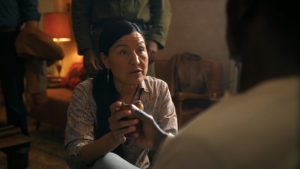
The scariest clown to ever appear on screen drives a storyline involving a fictional tribe in Maine. “IT: Welcome to Derry” uses horror writer Stephen King’s 1986 novel as a jumping off point. The hit HBO Max miniseries provides a new Native American theme to the plot with some veteran Native talent in front of and behind the camara. It is one of the notable projects from 2025, a list that also includes Sterlin Harjo’s “The Lowdown”, the TIFF Best Canadian Feature winner, “Uiksaringitara,” and SXSW Documentary Feature Special Jury Award winner, “Remaining Native.” We’ll recall some of the best film and TV projects from the year and see what’s in store for 2026.
GUESTS
Johnnie Jae (Otoe-Missouria and Choctaw), founder of Red Pop! News
Jason Asenap (Comanche and Muscogee), writer, critic, and filmmaker
Sunrise Tippeconnie (Commanche, Navajo and Cherokee), director of programming at deadCenter Film and co-host of the Reel Indigenous Podcast
Kimberly Guerrero (Confederated Tribes of the Colville Reservation and Salish and Kootenai), actress, screenwriter, and professor at the University of California, Riverside
Favorite films and television shows of the year
Sunrise Tippeconnie:
Tiger – (documentary short), director Loren Waters
Drowned Land – (documentary), director Colleen Thurston
Here’s an extended interview with IT: Welcome to Derry star Kimberly Guerrero speaking on her role of Rose in the television series. She starts off describing her early career in Hollywood.