Amazon is buying an AI-powered wearable bracelet maker that records your conversations. And, AT&T adds wireless and home-internet subscribers. Ariana Aspuru hosts.
Learn more about your ad choices. Visit megaphone.fm/adchoices

my private podcast channel
Amazon is buying an AI-powered wearable bracelet maker that records your conversations. And, AT&T adds wireless and home-internet subscribers. Ariana Aspuru hosts.
Learn more about your ad choices. Visit megaphone.fm/adchoices
Dozens of aid agencies accuse Israel of withholding food and say mass starvation in Gaza is spreading. Also: Donald Trump secures a trade deal with Japan, and a couple reunite with their love letters - 60 years later.
Today we bounce from saying goodbye to Ozzy Osbourne to celebrating Billy Joel to talking about Columbia suspending students to the shameful public display of Mahmoud Khalil to Trump's calling Obama a traitor. It's a wild ride. Give a listen.
Learn more about your ad choices. Visit megaphone.fm/adchoices
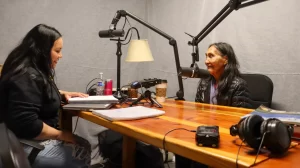
Education advocates are launching a multi-year program to develop a game and to teach the Denaakk’e language in schools. That and another language teaching apps come at a time when almost all federal funding for language revitalization is eliminated. We’ll also talk with a man about his personal journey learning the Cherokee language, an undertaking that inspired him to learn more about his tribal language’s history and importance in maintaining culture.
GUESTS
Joel Isaak (Dena’ina Athabascan), director of language and culture for the Kenaitze Indian Tribe
Mariah Pitka (Louden Tribe), executive director for the Doyon Foundation
Dr. Benjamin Frey (Eastern Band of Cherokee Indians), assistant professor of Cherokee language and culture at the University of North Carolina–Asheville
Jamie Jacobs (Tonawanda Seneca), managing curator for the Rock Foundation collections at the Rochester Museum and Science Center
Break 1 Music: Siyo, Siyo (song) Paula Nelson (artist) C.H.A.N.T. Cherokee Hope And New Traditions (album)
Break 2 Music: Steamboat Akalii Song (song) Jay Begaye (artist) Horses Are Our Journey World (album)
Education advocates are launching a multi-year program to develop a game and to teach the Denaakk’e language in schools. That and another language teaching apps come at a time when almost all federal funding for language revitalization is eliminated. We’ll also talk with a man about his personal journey learning the Cherokee language, an undertaking that inspired him to learn more about his tribal language’s history and importance in maintaining culture.
GUESTS
Joel Isaak (Dena’ina Athabascan), director of language and culture for the Kenaitze Indian Tribe
Mariah Pitka (Louden Tribe), executive director for the Doyon Foundation
Dr. Benjamin Frey (Eastern Band of Cherokee Indians), assistant professor of Cherokee language and culture at the University of North Carolina–Asheville
Jamie Jacobs (Tonawanda Seneca), managing curator for the Rock Foundation collections at the Rochester Museum and Science Center
Break 1 Music: Siyo, Siyo (song) Paula Nelson (artist) C.H.A.N.T. Cherokee Hope And New Traditions (album)
Break 2 Music: Steamboat Akalii Song (song) Jay Begaye (artist) Horses Are Our Journey World (album)
James O'Beirne discusses Bitcoin development challenges, the CTV soft fork controversy, and why protocol upgrades have stalled. He explains the community response to his developer letter and Bitcoin's ossification risks.
You're listening to Bitcoin Season 2. Subscribe to the newsletter, trusted by over 7,000 Bitcoiners: https://newsletter.blockspacemedia.com
Bitcoin developer James O’Beirne joins us to talk about the current state of Bitcoin development, the controversial CTV (OP_CheckTemplateVerify) soft fork proposal, and why he organized a letter signed by 66+ prominent Bitcoin developers requesting Bitcoin Core focus on protocol upgrades. We dive deep into Bitcoin's development culture, the post-SegWit era challenges, and the growing concern about Bitcoin's ossification.
Subscribe to the newsletter! https://newsletter.blockspacemedia.com
**Notes:**
• 66 developers signed CTV support letter
• 96% of Bitcoin value uses non-taproot outputs
• 19% of global hashrate supports CTV proposal
• 5+ years of CTV development and testing
• 5 Bitcoin bounty offered for CTV bugs found
• 16.5 years since Bitcoin's initial release
Timestamps:
00:00 Start
01:55 Jame's work
08:33 History of BTC development
12:37 Culture & the block size war
16:34 Code change process
24:29 The CTV letter origin
33:53 Reception of the letter
38:33 Why is there resistance?
40:53 Alternative proposal
48:20 Upgrade Hooks
50:36 Future outlooks for changes
54:49 Reasons for optimism
-
👋Bitcoin Season 2 is produced Blockspace Media, Bitcoin’s first B2B publication in Bitcoin. Follow us on Twitter and check out our newsletter for the best information in Bitcoin mining, Ordinals and tech!
Enjoy the show? Check out our website and newsletter by clicking here.
Questions or want to sponsor? hello@blockspace.media
See Privacy Policy at https://art19.com/privacy and California Privacy Notice at https://art19.com/privacy#do-not-sell-my-info.
At an artificial intelligence summit in Washington today, we'll learn more about the Trump administration's plans for guardrails to keep a potentially dangerous technology in line. Other topics likely to be addressed include the federal government's use of AI, energy-hungry data centers, loosened export controls on AI chips, and what the administration perceives as anti-conservative bias in tech. Also: what to make of Trump's trade deal with Japan, and what to expect from Tesla's Q2 results.
The U-S reaches a trade deal with Japan. New York bomb plot. Paying tribute to Ozzy Osbourne. CBS News Correspondent Steve Kathan has today's World News Roundup.
To learn more about listener data and our privacy practices visit: https://www.audacyinc.com/privacy-policy
Learn more about your ad choices. Visit https://podcastchoices.com/adchoices
From the BBC World Service: President Donald Trump has announced a deal with the world's fourth-largest economy. After weeks of tense negotiations, the U.S. will cut its import tax on Japanese cars and parts from 25% to 15%. The U.S., in return, will get $550 billion of investment from Japan. Plus, two former bank traders in the U.K. who allegedly manipulated interest rates have had their convictions overturned, and locals in Spain's Andalusia region are celebrating Sherry with a special competition.