Texas National Guard boots on the ground in Illinois. James Comey has a day in court. Air travel gets squeezed more by the government shutdown. CBS News Correspondent Steve Kathan has those stories and more on the World News Roundup podcast.
From the BBC World Service: Gold has breached $4,000 an ounce for the first time, following one of its strongest monthly performances and its biggest sustained rally since the 1970s. What's driving the surge? Then, British Prime Minister Keir Starmer is attending a two-day summit in India focused on trade, but he's insisting the U.K. won't issue more visas to Indian workers. Also on the show: Trump's "gold card" visas and newly minted billionaire soccer player Cristiano Ronaldo.
Plus: Unofficial jobs numbers are starting to come in from Wall Street, pointing to the U.S. labor market losing steam. And, Swiss tech giant ABB looks to sell off its robotics business to Japan’s Softbank. Caitlin McCabe hosts.
France’s newly-appointed prime minister has resigned only weeks into the job. Now President Emmanual Macron has given him 48 hours to come up with a plan for next year’s budget. Can Macron survive the turmoil? As driverless taxis take over San Francisco, what will happen to the human drivers? And remembering Jilly Cooper, queen of the bonkbuster
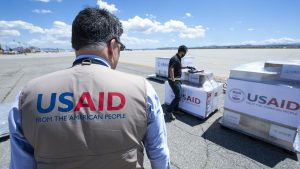
President Donald Trump and his administration abruptly ended billions of dollars in aid to foreign countries, calling it wasteful and inappropriately supporting a liberal agenda. In addition to food and medicine that went directly to Indigenous people who need it, the money and goods also promoted agriculture programs and other incentives toward preventing people with few other options from resorting to the illegal drug trade and other criminal activity that has significant bearing on American interest abroad. We’ll hear about the direct effects of ending U.S. support of foreign countries as well as the long-term implications.
GUESTS
Sandra Lazarte (Quechua), former Indigenous Peoples and Climate advisor for U.S. Agency for International Development (USAID)
Leonardo Crippa (Kolla), senior attorney at the Indian Law Resource Center
Brian Keane, co-founder of Land is Life, former UN Permanent Forum rapporteur, and the first advisor on Indigenous Peoples’ Issues for U.S. Foreign Assistance
AI slop is pointless content shared online like fake images and videos. A new study in the Harvard Business Review wants us to consider a variant: “workslop,” or AI-generated reports, emails and more that are sloppily crafted.
The authors of the study say 40% of workers they surveyed have encountered workslop. And that's costing time and money.
Marketplace’s Nova Safo spoke with social psychologist and vice president of BetterUp Labs Kate Niederhoffer, who co-authored the study. She said workslop harms interpersonal work relationships, such as when one employee receives an AI written report from another.
Imagine a future where chocolate and coffee are rare and expensive; where cheap, nutritional staples, like corn and wheat, are threatened.
The climate crisis is a food and agriculture crisis. A third of global greenhouse gas emissions come from what’s on our plate. Cow burps, deforestation, water use and food waste all feed into making our planet unlivable. And it’s a double-edged sword, because as the planet heats up, staple crops are withering, soil is losing its nutrients, and droughts and famines will become more common. Our food systems are hurting the planet, and the hotter planet is hurting our food systems.
To survive, we need to drastically cut down our use of farmland and we need to find alternative meat sources that don’t give consumers the creeps. How will we keep feeding millions of people? And how will we do that with less land?
This season of “How We Survive,” we’ll take you on a food tour of the future. May we interest you in some lab-grown chocolate or some cell cultivated salmon (that is, if you’re not in Florida)? We explore the uncanny valley of meat and visit farmers in our nation’s breadbasket where hotter, drier, less predictable weather has global consequences. Finally, we’ll take you on the ground into one of the more demonized (and misunderstood) parts of the agricultural system: Factory farms.
There’s a hole in the map of Chicago. It turns out, it’s a cemetery. But there are many other cemeteries in Chicago that don’t show up as holes on the map, so what’s up with this one? We take you to the 19th Ward and explore the history of this dead zone.
The government shutdown enters its second week with no negotiations underway, as President Trump threatens permanent layoffs. The impact of the shutdown is spreading to the skies, where staffing shortages have forced some air traffic control towers to close and ground flights across the country. And former FBI Director James Comey appears in court to face felony charges, a case driven by pressure from President Trump.
Want more comprehensive analysis of the most important news of the day, plus a little fun? Subscribe to the Up First newsletter.
Today’s episode of Up First was edited by Kelsey Snell, Russell Lewis, Krishnadev Calamur, Mohamad ElBardicy and Alice Woelfle.
It was produced by Ziad Buchh, Nia Dumas and Christopher Thomas
We get engineering support from Stacey Abbott. And our technical director is Carleigh Strange.