0:00 – Pittsburgh, discussions of class, Gabe’s journey, Marxism, and the rumored “history of capitalism” trend in the academy.
20:00 – We dig into The Next Shift: steel in non-nostalgic terms, the difference between steel and healthcare (or manufacturing versus service), how nursing homes became so marginalized, and the strategic sectors for struggle today (healthcare? education?).
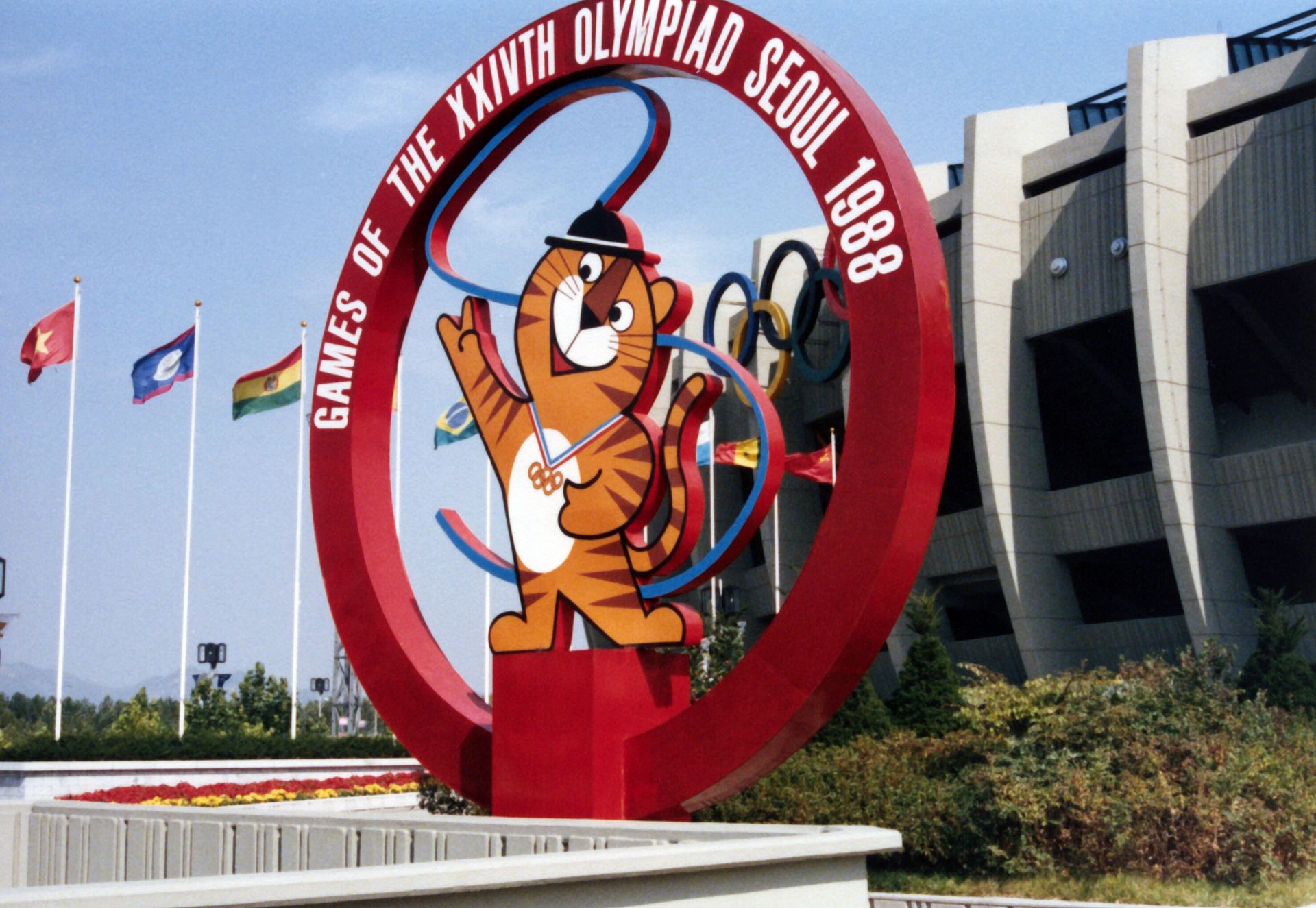
Hello, and welcome to Asian American Sports Talk radio—from the site of the 2032 Olympics!
Three topics today:
First, the Chinese Communist Party held a massive centennial celebration last week (here’s Andy talking about it), and China-watchers pounced on one phrase from Xi Jinping’s speech: that haters would suffer “broken heads and spilled blood” (頭破血流). Hey, imperialist pigs, nothing to see here!
(53:10) Finally, we weigh in on revelations that ESPN journalist Rachel Nichols criticized the promotion of colleague Maria Taylor on “diversity” grounds, as detailed by Kevin Draper in the Times. We talk about the meaning of “hard work,” private conversations, media no-nos, and how to talk about diversity (or not) in 2021.
Today’s episode is about housing, the fight to end single-family zoning, YIMBYs, NIMBYs and PHIMBYs. Our guest today was Darrell Owens, a housing activist and policy analyst. We went through a lot — Berkeley’s recent unanimous initiative to end single-family zoning, asked the inevitable questions about whether this would actually help make Berkeley more affordable, talked a bit about the PHIMBY movement (Public Housing in My Backyard), the pragmatic limitations of all housing work, and much more. Give it a listen!
This week, we talk about the nightmare of piled-up container ships on the West coast, why Covid has triggered these crises along the global supply chain, a bit of logistics history, and the dire ecological future that awaits us.
Also, for the first time in a while, some listener questions:
* Are there racial aspects to Yang’s mayoral downfall? Or do Yang’s two campaigns tell us something about the difference between appealing to Asians versus a wider public?
* More on the “Asian pessimism” discussion from last week?
* Any social-justice wins to be happy about?
Thanks to Stephanie, Sam, and Cliff for their questions! And thanks to all of you for listening and subscribing. Stay cool!
Today: another round in our long-simmering, passive-aggressive professional feud (journalists vs. historians), occasioned by two new pieces on how we talk about and apply the lessons of U.S. history.
First, UCLA historian Robin D.G. Kelley in conversation with George Yancy in Truthout. They talk about the recent surge of interest in the 1921 Tulsa Massacre and what’s lost in our narrow focus on “Black Wall Street.” What does the Hollywoodification of race politics mean for working-class stories?
Second, Princeton historian Matt Karp’s “History as End” in Harper’s. Karp argues that U.S. history, typically the domain of the patriotic right, has been taken up increasingly by left-liberal journalists and historians, and in a noticeably pessimistic register.
Is public history too obsessed with “origins” and analogies? What are its dominant politics? Do stories of upward mobility play out differently for different groups? Do history and journalism inhibit forward thinking? Or should journalists and historians spend even more time talking about history?!
This Saturday, join Jay, Andy, and Tammy (and other friends of the pod) for the Asian American Writers’ Workshop’s Page Turner conference! Register here, and use discount code: FRIENDOFAAWW!
In the book, she analyzes different moments in the history of Asian migration to North America and their attendant racialization. In particular, we discuss the association of Asian immigrants with "excessive economic efficiency." That is, the basis of anti-Asian racial sentiment has been the idea that Asians represent a hyper-efficient economic threat. Anti-Asian racism, then, is a sort of misplaced, reactionary revolt against capitalism itself.
Examples span from the 19C. "yellow peril" of Chinese miners and railroad workers, culminating in Chinese Exclusion; fears of Japanese property ownership, buttressing WWII internment; and even now, the "model minority" stereotype of post-1965 Asian immigrants ("high-tech coolies" in white-collar jobs, engineering, tech), who are both revered for their efficiency but also scapegoated for the abstract and destructive ills of globalization.
I see Day's work as contributing to literature on the history of racial ideas specific to the history of capitalism. Most famously, we have books and essays on how slavery and segregation turned the social categories of "White" and "Black" into biological ones by the nineteenth century. But of course, her intervention is to theorize the specificity of Asian racialization.
Thus, Anti-Asian racism is not simply analogous to anti-Black racism, for instance, which centers on ideas of biology and inferiority, but rather represents something abstract and threatening, personifying and embodying the destructiveness of capitalist value. In this sense, it is closer to modern anti-Semitism.
Ultimately, Day returns to the bigger question of how Asian racialization fits alongside other racial forms in North America, such as indigenous, Black, Latinx, etc.
Other topics include: the politics of being a PMC Asian, fears of "alien capital" around the world, locating the role of literature and art, the relationship between borders and prisons, and joining reading groups for Marx’s Capital.
Also, a quick note: this episode’s format is a bit different. Alien Capital was actually chosen for the inaugural session of the TTSG Discord’s new monthly (?) book club back in April/May. We discussed the book one week before this episode, and later, Andy spoke with Prof. Day online, with listeners in attendance.
The first half is our interview; the second half (49:30) features questions from the Discord community themselves (one calling in from a van full of listeners) either spoken directly or read out loud by Andy.
Finally, a few works referenced in the conversation:
We review the “wild” vs. “lab leak” theories, fears of anti-Asian backlash in the US, anti-China geopolitics, the need for greater transparency among all nations for the sake of global public health and science (read this, by friend of the pod Yangyang Cheng), and the political backlash that may await experts and scientists who dismissed the lab theory (read Thomas Frank and Matt Yglesias on technocratic libs and social-media bubble-ology).
Second, we revisit the classic documentary, Who Killed Vincent Chin? (1987, dirs. Christine Choy and Renee Tajima-Peña). We talk about the murder case, the film, and how these real-world and on-screen histories resonate today. We also discuss the recent controversy around, and cancellation of, a star-studded Vincent Chin podcast and new representations of Asian stories (including rumors of green-lit film and TV projects). Why do Hollywood Asian Americans keep forgetting (or willfully neglecting) to do their homework?
Reminder: If you’re into storytelling across media, join Jay, Andy, and Tammy (and other friends of the pod) on Saturday, June 26, for the Asian American Writers’ Workshop’s Page Turner conference! Register here, and use discount code: FRIENDOFAAWW!
We talk more about Comfort Women denialism, the Japanese online right (netto uyoku ネット右翼), and the history and present state of Japanese studies and east Asia geopolitics. How did the U.S. encumber a reckoning with the Japanese empire? How are Comfort Women and the war in China (1937-1945) taught in Japan today? How do these issues reflect shifting power struggles between Japan, Korea, China, and the rest of Asia?
We then talk about Chelsea’s recently released book Coed Revolution, focusing on the role of women students in Japan’s “new left” but also asking questions about the legacy of the “new left” and its place in the pivotal 1970s/80s transformation of politics and society, in Japan and around the world.
Also: Japan’s COVID and vaccine situation and “why the f-ck” are we still holding the Tokyo Olympics this year?
It’s just us three this week, talking recent news (and some hot goss).
First, we discuss the suppressed vigil for the 32nd anniversary of the Tiananmen Square massacre (6.4.1989) in Hong Kong. When thousands of police officers cordoned off the usual gathering place, Victoria Park, Hong Kong residents came up with creative ways to demonstrate, using cell phone flashlights and much else. (Remember: “Be water.”) We talk about contemporary meanings of Tiananmen in Asia and the rest of the world, the chilling effect of HK’s National Security Law, and the 1989 protesters’ demands not only for democracy but also a better life for Beijing’s working class (h/t Zhang Yueran). Bonus content: “A Day to Remember,” a short film on the suppression of public discussion about Tiananmen in China.
Second, we unpack the right-wing bogeyman of critical race theory, legislative attacks on free speech in schools, and awful stories out of Kansas, Montana, and Pennsylvania. What’s the right’s bigger strategy here? Has the U.S. left failed by ceding “free speech” to conservatives? How dangerous are these currents, and what is to be done? Plus: white tears in Tammy’s middle-school social studies class.
Friend of the pod, Jay, with Justice is Global, invites you to a free screening and discussion of “Call Her Ganda,” a documentary about Jennifer Laude, a Filipina trans woman who was murdered by a U.S. Marine—and the crew of activists who fight back.
The Zoom discussion will take place on June 10, with filmmaker PJ Raval, Filipino trans rights advocate Naomi Fontanos, and representatives of Malaya Movement and GABRIELA. (The film will be made available 24 hours beforehand.)
+++
If you’re into storytelling across media, join Jay, Andy, and Tammy (and other friends of the pod) on June 26 for the Page Turner conference at the incredible Asian American Writers’ Workshop. Register here, and use discount code: FRIENDOFAAWW!