When’s the last time you picked up groceries? Some of us hit up a local market every week; some folks buy in bulk at a Wal-Mart or a Costco, and some of us just go to whatever's closest. Overall, it's the same old story: you gotta eat. Yet as Ben, Matt and Noel discover in today's episode, it turns out there's more going on behind the scenes. Leveraging big data and mass surveillance, your grocery store now knows more about you than ever before. There's a conspiracy in your grocery aisle, and it could well affect your bottom line.
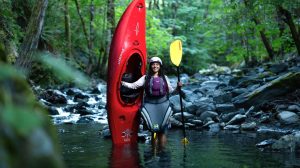
Keeya Wiki (Yurok and Maori) is not yet old enough to vote, but she is making waves in official discussions about climate policy and environmental sustainability. She was among a group of young people who made a historic kayak journey down the Klamath River from its source in the Cascade Mountains to its confluence with the Pacific Ocean after the largest dam removal project in history. It was both a celebration of her tribe’s accomplishments and a statement about what she sees as the future of successful, tribally-driven environmental policy. Since then she has also served as a delegate to the U.N.’s recent climate summit in Brazil. We’ll hear about her determined and creative intersection of cultural knowledge and modern climate activism.
GUESTS
Keeya Wiki (Yurok and Māori descent), Indigenous advocate
Ruby Williams (Karuk), Native water activist and kayaker
James is joined by Mick and Georgio to discuss the Sarajevo Safari documentary and establish context for the investigations of people who travelled to Sarajevo to kill people during the siege of the city.
It's bizarre to think that -- not too long ago -- the idea of having something as powerful as a smart phone in your pocket would seem like something out of Star Trek. But now these handy devices go with us throughout most of our lives. A steady stream of feel-good chemicals from social media, dangerously convenient ways of buying things through apps, health and location tracking and more. And every piece of data is, somehow, tracked. While it's no secret that companies use information like this for targeted advertising, the true potential of this data aggregation, and the true danger this aggregation poses for society, has only recently come to light. Join the guys to learn more about what happens in a world where you become your phone.
Would you ride on the back of a random orca at the beach? For the final part of this series on Free Willy star Keiko, deep sea correspondent Brianna Bowman tells Sarah about his rewilding and return to the open ocean -- something that up until that point had never been done before. Digressions include introducing adult cats to each other, Fyre Fest, and the 27 club.
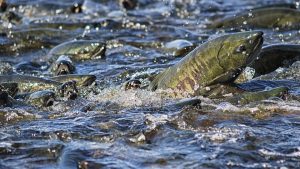
The federal panel that oversees commercial and subsistence fishing in Alaska is putting a hard limit on the number of chum salmon that are caught — and wasted — by commercial pollack trawlers. It is a long awaited — and controversial — decision by the North Pacific Fishery Management Council after years of outcry by tribes to address the factors that go into the disappearing runs of salmon that Alaska Native people have always relied on for survival. Although presented as a compromise, the bycatch limit is seen as a severe blow by commercial fishers, who say such restrictions could be catastrophic to the industry. The decision comes as the state also instituted severe regional restrictions on king salmon fishing because of low numbers. They are among the latest measures to address the big and complex ecological threats to what is historically the most productive salmon fishery in the world.
GUESTS
Charles Wright (Athabascan), secretary/treasurer for Tanana Chiefs Conference
Jonathan Samuelson (Yup’iaq and Dene), vice-chair of the Kuskokwim River Inter-Tribal Fish Commission
Craig Chythlook (Yup’ik), executive director of the Yukon River Inter-Tribal Fish Commission
Terese Vicente, policy and programs director for the Kuskokwim River Inter-Tribal Fish Commission
Full statement from the Alaska Pollock Fishery Alliance (APFA) mentioned in today’s show:
“The Council’s decision reflects the seriousness of the challenges facing Western Alaska chum salmon and the complexity of managing a dynamic fishery. The pollock industry respects the Council process and remains committed to working within this new framework while continuing to invest in science-based, real-time avoidance tools that have already delivered meaningful reductions in Western Alaska chum bycatch.
We share the goal of protecting salmon and the communities that depend on them while also providing the flexibility to respond to real-time fishing conditions. This allows the fleet to harvest its pollock while providing important benefits to Alaskan coastal and fishery dependent communities. While the alternative chosen establishes a restrictive cap and includes elements of fixed closures that may inhibit responsiveness to changing conditions, we understand the Council’s desire for strong incentives and clear parameters for management. We adhere to the principles of continuous improvement and will work with managers, scientists, and engaged partners to ensure the use of all available tools, including the use of real-time genetic analysis, to achieve meaningful conservation outcomes.”
Break 1 Music: Canoe Song (song) Chenoa (artist) Spirit of Salishan (album)
In case you missed it, ICYMI stands for In Case Y’all Missed It. And while 2025 was a weird year (not as weird as 2026!) it was filled with some favorite new Ologists and episodes. So since things have been a bit of a busy blur for many of us, we wanted to give you a sampler platter/refresher on some of the best moments of last year’s episode. Because it's not just what we learned, but it’s the friends we made along the way, RIGHT? And if you haven’t heard the full ep, hop over and enjoy it! Or send this to a friend as an intro to Ologies. Either way, kick back for a quick episode with stellar curation.
Garrison and Lance from The Serfs discuss the online right’s attempt to weaponize the tragedy, misinformation about the shooter’s politics, and how the shooter's online footprint shows a growing obsession with other mass shooters.
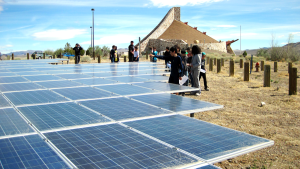
With help from Congress, the Trump administration stripped some $1.5 billion in federal funds previously promised to tribes. A lot of that was in the form of contracts for clean energy manufacturing and development — new money doled out three years earlier as part of President Joe Biden’s Inflation Reduction Act. A new analysis by the Brookings Institution identifies three funding and policy changes, including reductions in SNAP and Medicaid, that negatively affect Native Americans. The research firm says the actions continue a pattern of disinvestment and falls short of the federal government’s binding responsibility to Indian Country.
GUESTS
Robert Maxim (Mashpee Wampanoag), fellow at The Brookings Institution
Chéri Smith (Mi’kmaq descendant), president and CEO of the Alliance for Tribal Clean Energy
Timothy Nuvangyaoma (Hopi), vice president of tribal engagement for the Alliance for Tribal Clean Energy and former chairman of the Hopi Tribe
Dr. Kyle Whyte (Citizen Potawatomi Nation), professor at the School for Environment and Sustainability at the University of Michigan
With no warning to the public or the local government, the FAA suddenly announced airspace in El Paso would be completely shut down until February 20th -- only to rescind the order less than 11 hours afterward. Cue the conspiracy theories. The guys review some of the recent Epstein revelations, mysterious phone call cover-ups, the story of a mysterious biolab in Vegas, and more in this week's strange news segment.