Plus: OpenAI and Databricks strike a $100 million deal to sell AI agents. U.S. senators send letters to big tech companies demanding information on H-1B visa usage. Nvidia-backed AI startup Nscale raises $1.1 billion for data-center rollout. Zoe Kuhlkin hosts.
A new HIV prevention drug will be made available at a lower cost in over 100 low-income countries within two years, including across Africa. It's a move expected to give millions access to the breakthrough treatment and potentially bring the world closer to ending the HIV/Aids epidemic. So, how affordable and effective is it?
Also, Zimbabwe continues on a quest to become Africa’s blueberry capital after recently signing a tariff free export agreement with China, one of the largest consumers of the fruit. What impact will it have on the country?
And why students in Europe are learning Hausa, a language spoken by millions of people in West Africa
Presenter: Charles Gitonga
Producers: Yvette Twagiramariya and Patrcia Whitehorne in London. Madina Maishanu in Abuja.
Technical Producer: Chris Ablakwa
Senior Journalists: Sunita Nahar and Karnie Sharp
Editors: Andre Lombard, Samuel Murunga, Maryam Abdalla and Alice Muthengi
A gunman opened fire at a Dallas ICE facility, killing one detainee and injuring two others before taking his own life. Separately, a former DACA recipient died in ICE custody, raising calls for oversight. In Inglewood, the city will pay $25 million to Maurice Hastings, who spent 38 years imprisoned for a crime he didn’t commit. California lawmakers pass a bill to ban streaming ads louder than programs. In business, Amazon heads to trial over Prime cancellation practices, while Nvidia announces a $100 billion investment in OpenAI to build AI data centers.
In today’s Markets Outlook, Pudgy Penguins and Abstract CEO Luca Netz join CoinDesk’s Jennifer Sanasie and Sam Ewen from Korea Blockchain Week to share his insights on why the country is the new epicenter of both global culture and crypto. He explains the staggering statistics on Korean crypto adoption, what American companies can learn from this market, and how his company, Abstract, is working to bring fun back to the EVM.
This content should not be construed or relied upon as investment advice. It is for entertainment and general information purposes.
-
This episode was hosted by Jennifer Sanasie and Sam Ewen.
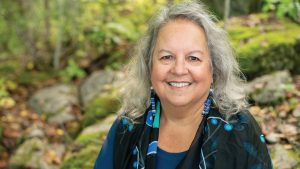
Propelled by the success of her runaway bestseller, “Braiding Sweetgrass”, Robin Wall Kimmerer (Citizen Potawatomi) continues a passion for weaving together the science, the cultural knowledge, and the beauty of the natural environment and importance of taking notice of it. In her new children’s picture book, “Bud Finds Her Gift,” a young girl discovers what it means to receive and give the gifts of nature. And her book, “The Serviceberry,” lands on the small fruit clusters as a starting point to awaken one’s gratitude for the environment’s abundance. We’ll hear from Kimmerer about the arc of her work and the additional knowledge she’s collected from it.
Break 1 Music: My Wild Rose (song) Blue Moon Marquee (artist) Scream, Holler, and Howl (album)
FCC chair Brendan Carr’s “easy way or hard way” threat to TV broadcasters lit a censorship firestorm this week. Our Cato panel digs into the government's jawboning, broadcast licensees' “junior-varsity” First Amendment rights, and whether it’s time to scrap the FCC altogether. Plus, the latest on AI regulation and the art of the TikTok deal.
Featuring Gene Healy, Ryan Bourne, Brent Skorup and Jennifer Huddleston
Dallas ICE facility shooting. Trump targets former FBI director James Comey. Wrongful death lawsuit filed in DC plane crash. Correspondent Steve Kathan has these stories and more on the CBS World News Roundup.
The Office of Management and Budget sent out a memo with stark instructions for heads of federal agencies: They should consider layoff notices for all employees in programs that haven’t been funded yet for the government’s 2026 fiscal year, which starts Oct. 1. Also on the show: The U.S. is in negotiations to lend $20 billion to Argentina’s central bank, and climate change is treatening New Mexico's centuries-old irrigation system.
From the BBC World Service: Apple has called for the European Union's antitrust watchdogs to scrap some of its tech regulations, which it says lead to a worse experience for users. It's not the first time Apple has voiced its opposition to Europe's Digital Markets Act. We hear more. Plus, China has — for the first time — set a target for reducing carbon emissions. And, a Dutch village famous for its windmills is planning to charge visitors to see them.
Introducing the newest thing in higher (and we really mean higher — like look UP) education: The Flying Pig Academy. A dream of The Village Square (with support from Florida Humanities) for many years, it’s finally aloft. The division in American society is big and seems impossible at times to address.
This Flying Pig Episode: If you’re trying to build community in this fractured time (for anything), have we got a hack for you. At a time when binaries rule the day (you’re either with “us” or “them,” with us or against us), “complicating the narrative” between groups has a powerful effect on the conversations and relationships that are even possible. That means civic entrepreneurs need to be on the lookup for unexpected combinations—of traits in people, of relationships between people, of coalitions of groups. We call it being criss-crossey, a term we’re just sure is going to sweep the nation.
Miss the first Flying Pig Academy Episode? Find it here.
The second in the series, after "Location, Location, Location" is an homage to our intellectual hero (and lucky for us, our friend and colleague) Dr. Jonathan Haidt who - literally - wrote the book for Pigs With Big Dreams. The Righteous Mind: Why Good People Are Divided by Politics and Religion.
Oh and if you haven't watched the "hive switch-y" Almost Famous Tiny Dancer scene we mention toward the end of the episode, here's your chance.
The Village Square is a proud member of The Democracy Group, a network of podcasts that examines what's broken in our democracy and how we can work together to fix it.