
Oil prices are jumping around this morning, but you can bet they're up — around 6-7%. Gold, a safehaven for investors, is up about 2%. "We're in a world where markets and investors are increasingly uncertain about where their money is safe," said Julia Coronado of MarcoPolicy Perspectives in a discussion of today’s market movements. Also: why we pay such close attention to the monthly jobs report and how sites like Moltbook can disrupt the AI industry.
Focus on Africa - What’s the Impact of US-Israel-Iran War on Africa
As the US-Israel conflict with Iran intensifies, concerns grow over its effects on Africa, including the security and economic impacts. Thousands of Africans working or traveling in Gulf cities like Dubai, UAE, and Doha, Qatar, are already facing disruptions, with some reportedly stranded at airports. Meanwhile, several African countries have called for urgent de-escalation to prevent the crisis from worsening.
At the same time, Ghana has removed Kotoka’s name from its airport, restoring it to Accra International Airport. The government says national monuments should reflect democracy, not coups. The decision has sparked debate among Ghanaians, coming sixty years after a military coup that reshaped the country’s political history.
Presenter: Nkechi Ogbonna Producer: Ayuba Iliya, Keikantse Shumba and Godwin Asediba Technical Producer: Jonathan Mwangi Senior Producers: Bella Twine and Blessing Aderogba Editors: Samuel Murunga and Maryam Abdalla
WSJ Tech News Briefing - TNB Tech Minute: Amazon Web Services Disrupted in U.A.E.
Plus: Nvidia is investing $2 billion in advanced optic technology companies Lumentum and Coherent. And Chinese artificial intelligence startup MiniMax’s annual revenue surged in 2025. Anthony Bansie hosts.
Learn more about your ad choices. Visit megaphone.fm/adchoices
Newshour - US-Israel war with Iran: Strikes continue
We hear from Lebanon and head to the Persian Gulf to take a look at the impact on oil prices. Israel's Head of State, President Isaac Herzog speaks to the BBC about his perspective on the conflict.
Also on the programme: we hear about the British allied response to the war as Cyprus remains on high alert and Greece sends military vessels and aircraft to help.
(Photo: Aftermath of an Israeli & US strike in Gandhi Hotel Hospital in Tehran Credit: Majid Asgaripour/West Asia News Agency via Reuters)
Marketplace All-in-One - Iran’s role in the global oil supply
The U.S. and Israel's war with Iran means a disruption of global oil markets. Iran has closed navigation through the Strait of Hormuz, leaving hundreds of ships sitting idle. While a slowdown of production and exports could hit China particularly hard, this conflict could also impact what U.S. consumers pay at the pump. This morning, we'll learn more, and then we'll hear how air carriers are being affected by the attack.
Native America Calling - Monday, March 2, 2026 — Native crews help solve the growing marine trash problem
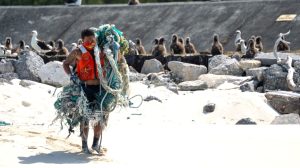
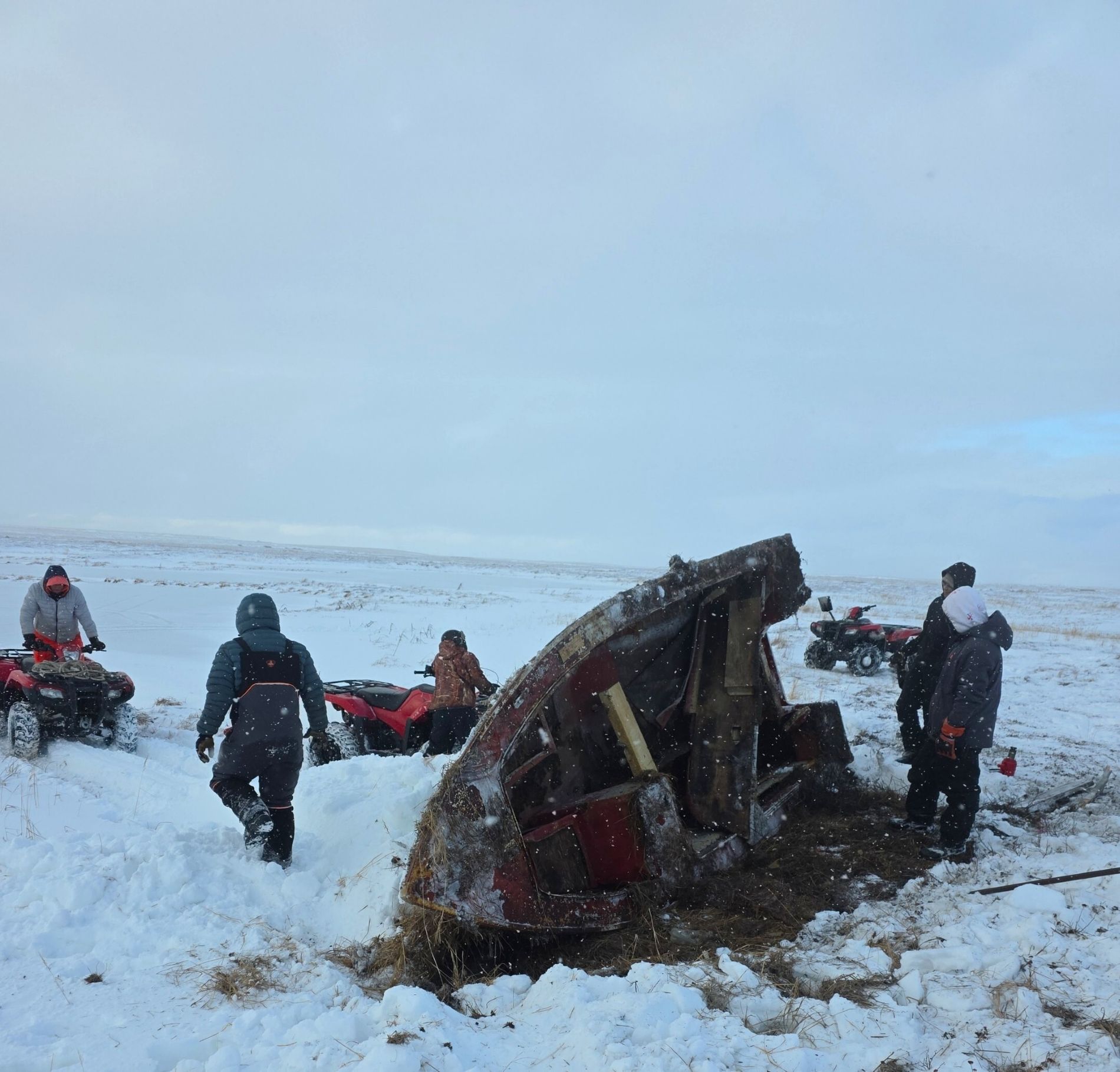
A crew from Chevak, Alaska recover a submerged boat, part of the marine debris created by Typhoons Merbok (2022) and Helong (2025). (Photo: Richard Tuluk)
Typhoon Merbok swept buildings, boats, and tons of trash into the sea off the west coast of Alaska in 2022. The city of Chevak is one of many coastal Alaska Native communities tasked with helping to find and recover that and other marine debris clogging the coastal waters and shorelines. With federal funding help, the ongoing cleanup is aimed at making the waterways safe for people and marine animals. A similar project is underway in Hawai’i, where the non-profit Papahānaumokuākea Marine Debris Project works year-round, pulling tons of debris from around the northwestern Hawaiian Islands, a place sacred to Native Hawaiians. Coastal tribes are an important piece of the puzzle for solving the growing problem of derelict nets, ropes, boats, and other trash that threaten marine ecosystems. In this program, we’ll talk with some of the people involved in the cleanup about what it takes to rid marine areas of unsightly and dangerous debris.
GUESTS
Richard Tuluk (Cup’ik), project manager for the City of Chevak
Grant Ka’ehukai Goin (Kānaka ʻŌiwi), cultural specialist and lead marine debris tech for the Papahānaumokuākea Marine Debris Project
CBS News Roundup - 03/02/2026 | World News Roundup
Iran war widens. First U.S. casualties. Texas mass shooting. CBS News Correspondent Steve Kathan has those stories and more on the World News Roundup podcast.
To learn more about listener data and our privacy practices visit: https://www.audacyinc.com/privacy-policy
Learn more about your ad choices. Visit https://podcastchoices.com/adchoices
WSJ Minute Briefing - Oil Jumps on Disruption Fears in Strait of Hormuz
Plus: Gulf states face Iranian counter attacks, upsetting their image of safety. And U.S. forces used Anthropic’s AI to coordinate strikes in Iran, defying a White House order to stop working with the company. Daniel Bach hosts.
Sign up for WSJ’s free What’s News newsletter.
Learn more about your ad choices. Visit megaphone.fm/adchoices
WSJ What’s News - Iran Strikes Back as Mideast Conflict Widens
A.M. Edition for Mar. 2. Iran is broadening the scope of its response to U.S. and Israeli strikes by targeting airports and other civilian sites in neighboring Gulf states. WSJ Middle East editor Andrew Dowell discusses the effect those attacks could have in deepening the Gulf’s resolve to fight back. Plus, WSJ correspondent Sune Rasmussen explains how Iran’s leadership is reacting to the killing of Ayatollah Ali Khamenei. And Dow Jones commodities reporter Giulia Petroni breaks down how fighting is sending oil prices surging and upending global supply chains. Luke Vargas hosts.
Sign up for the WSJ’s free What’s News newsletter.
Learn more about your ad choices. Visit megaphone.fm/adchoices
Start the Week - Reading and storytelling
The UK government has declared 2026, the National Year of Reading. The numbers suggest that reading needs all the public relations it can get. Under a third of school children say they read for pleasure and the number going on to read English Literature at University has shrunk by over a third in the last fifteen years. Their parents are not doing much better, with some surveys suggesting that any where up to half of adults have not read a single book in the last year. So, how can the case for the value of reading and the simple pleasure of picking up a book cut through? Tom Sutcliffe chairs Radio 4's discussion programme which starts the week. His guests are:
Margaret Busby was Britain's first Black woman publisher who has enjoyed a 50 year career at the centre of cultural life and the book trade. Among her achievements she founded a publishing house, edited the ground-breaking international anthologies Daughters of Africa and New Daughters of Africa and championed authors marginalised by the mainstream. Her new book Part of the Story: Writings from Half a Century features her own literary output from between 1966 and 2023.
Sarah Dillon, Professor at the University of Cambridge, has looked at the question 'what are you reading?' The books we encounter shape the choices we make and when it comes to scientists, it appears that ideas from imaginative literature influence their thinking. Storylistening: Narrative Evidence and Public Reasoning, co-authored with Dr Claire Craig, former Director of the UK Government Office for Science, makes the case for the value of attention to stories in decision making.
Lottie Moggach is an arts journalists and writer of literary thrillers - she's also edited, researched and taught writing. Her latest novel, Mrs Pearcey, is Victorian true crime novel. She reflects on historical fiction, her own reading and working as a writer today.
Producer: Ruth Watts